Amazon Dropshipping: Rules, Risks and How It Works
Is dropshipping allowed on Amazon? Amazon’s drop shipping policy explained: seller of record, packaging, returns, what is not allowed and key metrics.
Dropshipping is allowed on Amazon, but only on Amazon’s terms. You must be the seller of record, your name must be the only seller name on packing slips, invoices and packaging, and you must handle returns. Buying from another online retailer and having it ship to your customer in its own name is not allowed. Late or untracked shipments hurt your account health, so a fast, reliable supplier is essential.
How dropshipping works on Amazon
- You list products on Amazon as a seller-fulfilled offer (FBM).
- A buyer orders from you on Amazon.
- You pass the order to your supplier, who ships it directly to the buyer, packed as your shipment.
- You confirm the shipment on Amazon with a valid tracking number, and you handle any return or question.
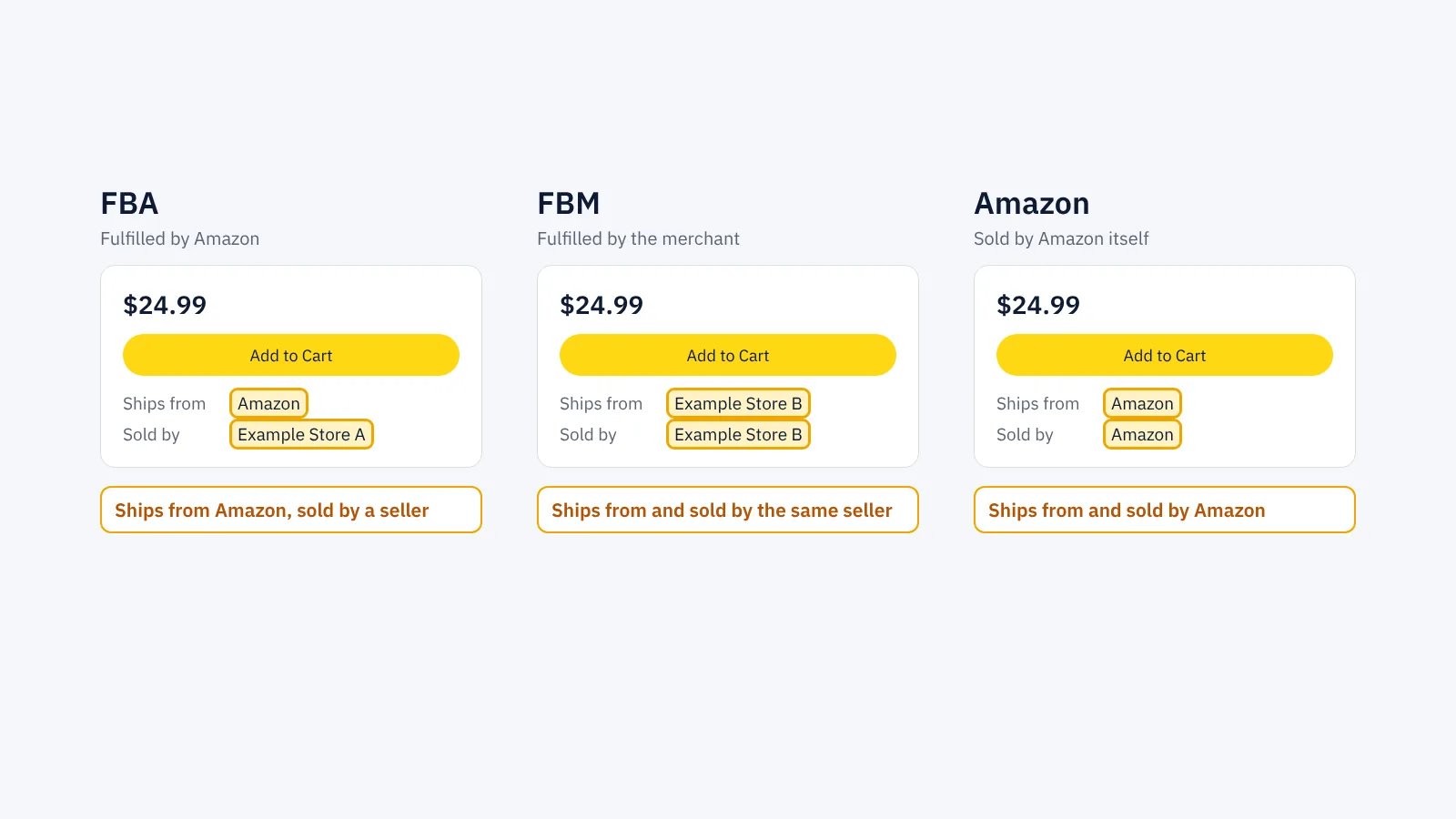
You never hold the stock yourself. That is the difference from FBA, where your stock sits in Amazon’s warehouses, and from arbitrage or wholesale, where you buy the stock first (FBA vs FBM, arbitrage, wholesale and private label compared).
What Amazon’s drop shipping policy requires
Amazon’s policy says that letting a third party fulfil orders on your behalf is generally acceptable, as long as you always:
- are the seller of record of the products,
- identify yourself as the seller on all packing slips, invoices, external packaging and other information that comes with the order,
- remove anything that identifies the drop shipper (packing slips, invoices, packaging or other information) before the order ships,
- accept and process customer returns yourself,
- follow your seller agreement and all other Amazon policies.
Read the current text in Seller Central for your marketplace before you start; Amazon updates its policies.
What is not allowed
| Situation | Allowed? |
|---|---|
| Supplier ships in plain packaging with your packing slip | Yes |
| Supplier ships with its own name, invoice or branded box | No |
| Buying from another online retailer and having it ship to your buyer | No, if the shipment does not show you as the seller, or names anyone else |
| You take returns and answer buyers | Required |
| Supplier is the contact for returns | No |
In practice, ordering a product from another retailer’s website and sending it to your Amazon buyer is the most common way sellers break the policy: the box, invoice or packing slip shows the retailer, not you.
The metrics that matter
Dropshipping uses seller-fulfilled shipping, so Amazon measures you on your supplier’s speed. In Account Health, watch:
- Late Shipment Rate: orders confirmed after the expected ship date. Amazon’s help pages set the target below 4%; above it, seller-fulfilled offers can be deactivated.
- Valid Tracking Rate: shipments with a working tracking number. Tracking that your supplier uploads still counts against you if it does not work.
- Pre-fulfillment Cancel Rate: orders you cancel before shipping, for example because the supplier is out of stock.
- Order Defect Rate: negative feedback, A-to-z claims and chargebacks.
Check the current targets in Seller Central. The most common dropshipping problems, stock-outs and slow suppliers, show up directly in these numbers.
Pros and cons
Pros
- No stock to buy up front and no storage.
- You can test many products quickly.
- No FBA fees: you pay your supplier and shipping instead.
Cons
- Thin margins: the supplier, shipping and Amazon’s referral fee all come out of one price.
- Slower delivery than FBA offers, which often win the Featured Offer (what the Buy Box is).
- Less control over stock, packaging and shipping speed, but full responsibility for them.
- Account risk if the supplier ships late, runs out or uses its own packaging.
How to set up dropshipping the right way
- Choose a supplier that blind-ships (plain packaging, your packing slip) and ships from the marketplace’s country (how to find dropshipping suppliers).
- Agree on the details in writing: handling time, order cut-off, tracking, stock updates, returns address and who pays for mistakes.
- Pick products where seller-fulfilled offers can compete (Amazon dropshipping product research).
- Set a realistic handling time in Seller Central, so orders are not marked late.
- Keep stock in sync with the supplier’s feed, at least daily, to avoid cancellations.
- Check approval for each product before you list it (Amazon Apply to Sell: gated products).
- Place test orders to see how the package actually arrives.
The faster way: research dropshipping products with ENSKOM
ENSKOM is a Chrome extension that reads public Amazon pages in your own browser:
- Detailed Research: for your ASINs, collect the current price, sellers, Featured Offer, FBA or FBM and Sales Rank, as Amazon shows them, to see where a seller-fulfilled offer can compete.
- ASIN Researcher: find the products in the exact categories of your supplier’s items, graded Very Strong, Strong or Related.
- Store Researcher: find every seller offering your ASINs.
- Export: copy the ASINs or export them to CSV or Excel and compare them with your supplier’s price list.
The Free plan includes every research feature.
Guides: Getting started · Detailed Research · Seller Discovery
FAQ
Is dropshipping legal on Amazon?
Yes, if you follow Amazon’s drop shipping policy: you are the seller of record, only your name appears on the shipment, and you handle returns.
Can I dropship from AliExpress or another marketplace to Amazon buyers?
Only if the shipment meets the policy and Amazon’s delivery expectations. Packages from retail marketplaces often carry the marketplace’s or another seller’s name, and long delivery times hurt your metrics, so many sellers avoid this.
Can I use FBA for dropshipping?
No. FBA means sending your stock to Amazon’s warehouses first. Dropshipping is always seller-fulfilled.
Do I need my own brand to dropship on Amazon?
No. You can add offers to existing product pages if you can sell the product, or create pages for your own brand. Either way, the policy rules apply.
What happens if I break the drop shipping policy?
Amazon says violations affect your account health and your ability to fulfil orders yourself, and can lead to losing selling privileges.